Peptide Pureness & Quantitation Testing

Quality Assurance For Researchers: Why It Begins With Recognition
Accurate decision of the specialty through capillary isoelectric focusing (cIEF) helps in peptide characterization and is vital for applications where peptide charge effects function and security. We aid identify chromatographic pureness from actual peptide amount so clients can prepare options and contrast whole lots with greater confidence. We choose methods according to peptide size, hydrophobicity, fee profile, and adjustment condition instead of compeling every example into one theme.- Selecting a respectable third-party laboratory is vital to getting trustworthy peptide recognition outcomes.HPLC-tested indicates the example was run through high-performance fluid chromatography to separate the target peptide from contaminations.These numbers obtain sprayed so often that it's easy to gloss over them-- just another spec on a product web page.Various particles "stick" to those particles with different toughness, so they travel through the column at different speeds.
What The Impurities Actually Are
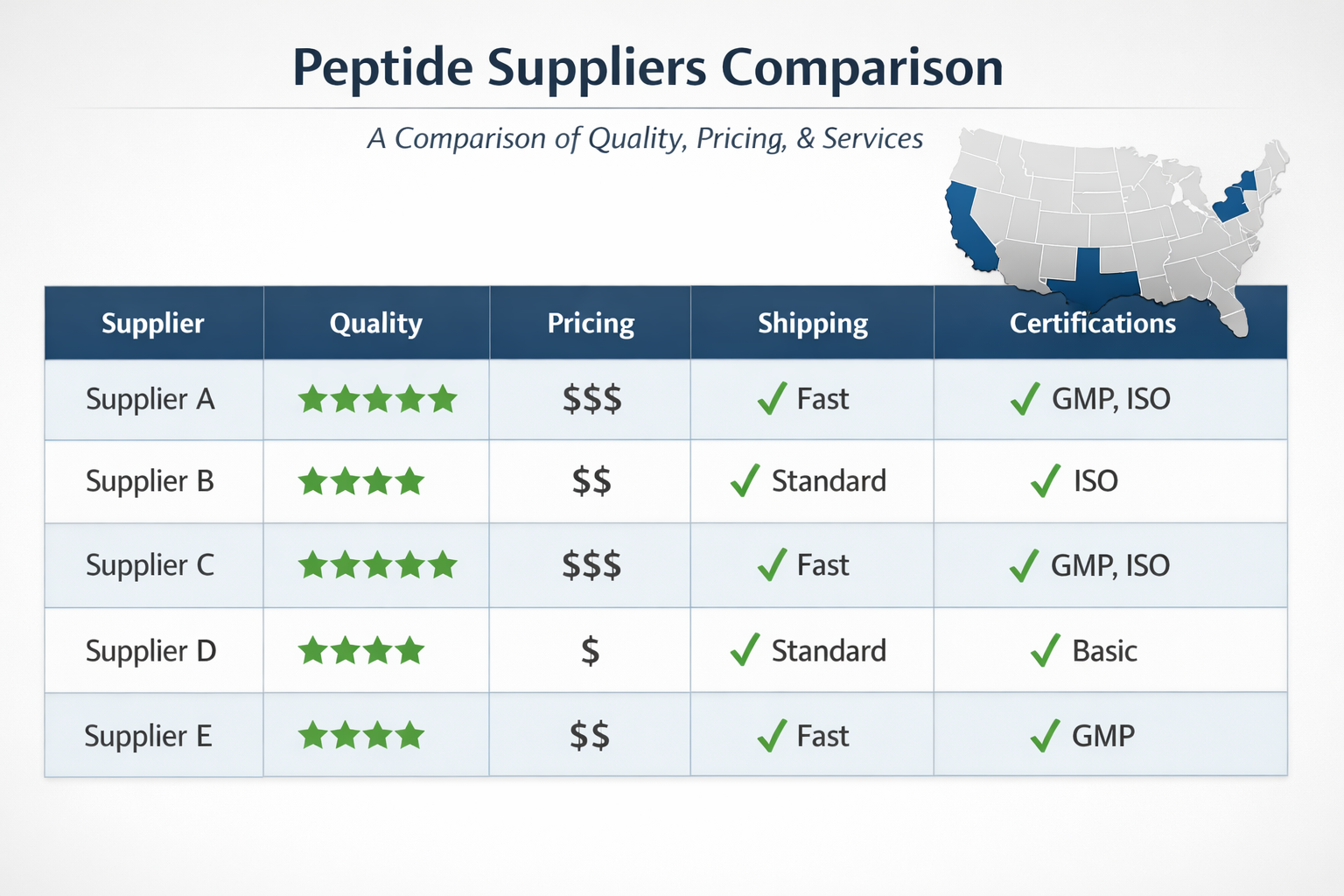
The table below web links common task goals to practical analytical panels and the sort of choices they assist sustain. Asparagine and glutamine residues can undertake deamidation, altering the peptide's charge and hydrophobicity. Deamidation is one factor storage conditions issue, particularly after a peptide has been reconstituted. Every product we bring is lab-tested and verified by third-party partners, so researchers recognize specifically what they're dealing with. Peptides including methionine or cysteine residues are susceptible to oxidation. Methionine can be oxidized to methionine sulfoxide; cysteine can create Additional hints unwanted disulfide bonds or be oxidized to sulfinic or sulfonic acid derivatives.
Theoretically, peptide purity is evaluated by the chromatogram generated by reversed phase HPLC, and in addition, we can acquire the number and family member quantity of possible spin-offs by computing the peak location. A premium chromatogram has a single, in proportion main height with a level baseline on either side. " Trailing"-- where the optimal tracks off slowly on one side-- can suggest column problems, sample overloading, or additional interactions in between the peptide and the stationary phase. In this setup, the stationary phase is hydrophobic (water-repelling), commonly C18-bonded silica. The mobile phase is a slope of water and a natural solvent like acetonitrile, commonly with a percentage of trifluoroacetic acid (TFA) to develop the tops.